Pomerania-Plast 2026 – o powłokach tworzonym w projekcie RASCOS dla infrastruktury przyszłości nad polskim morzem
By Katarzyna Suchon
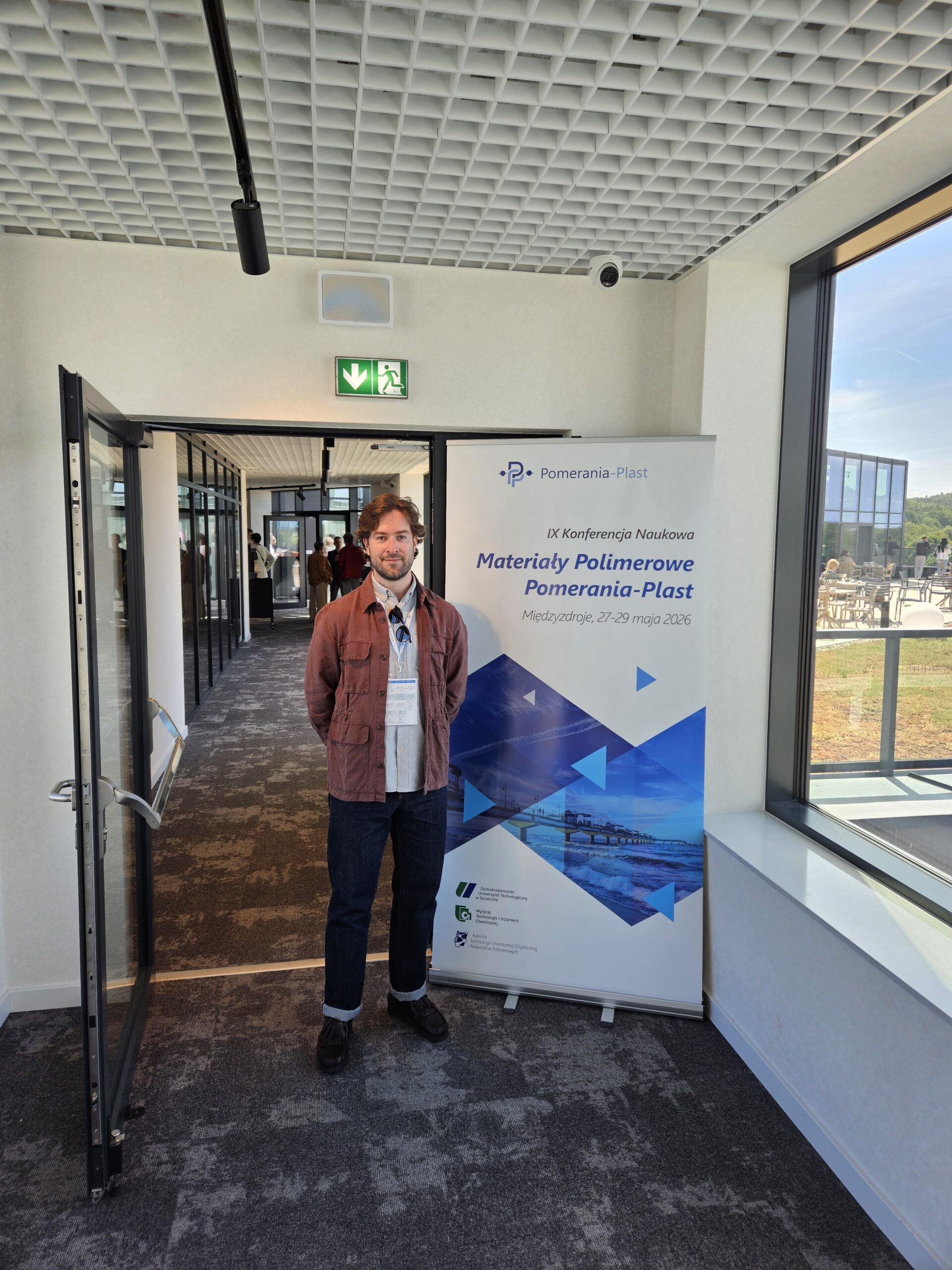
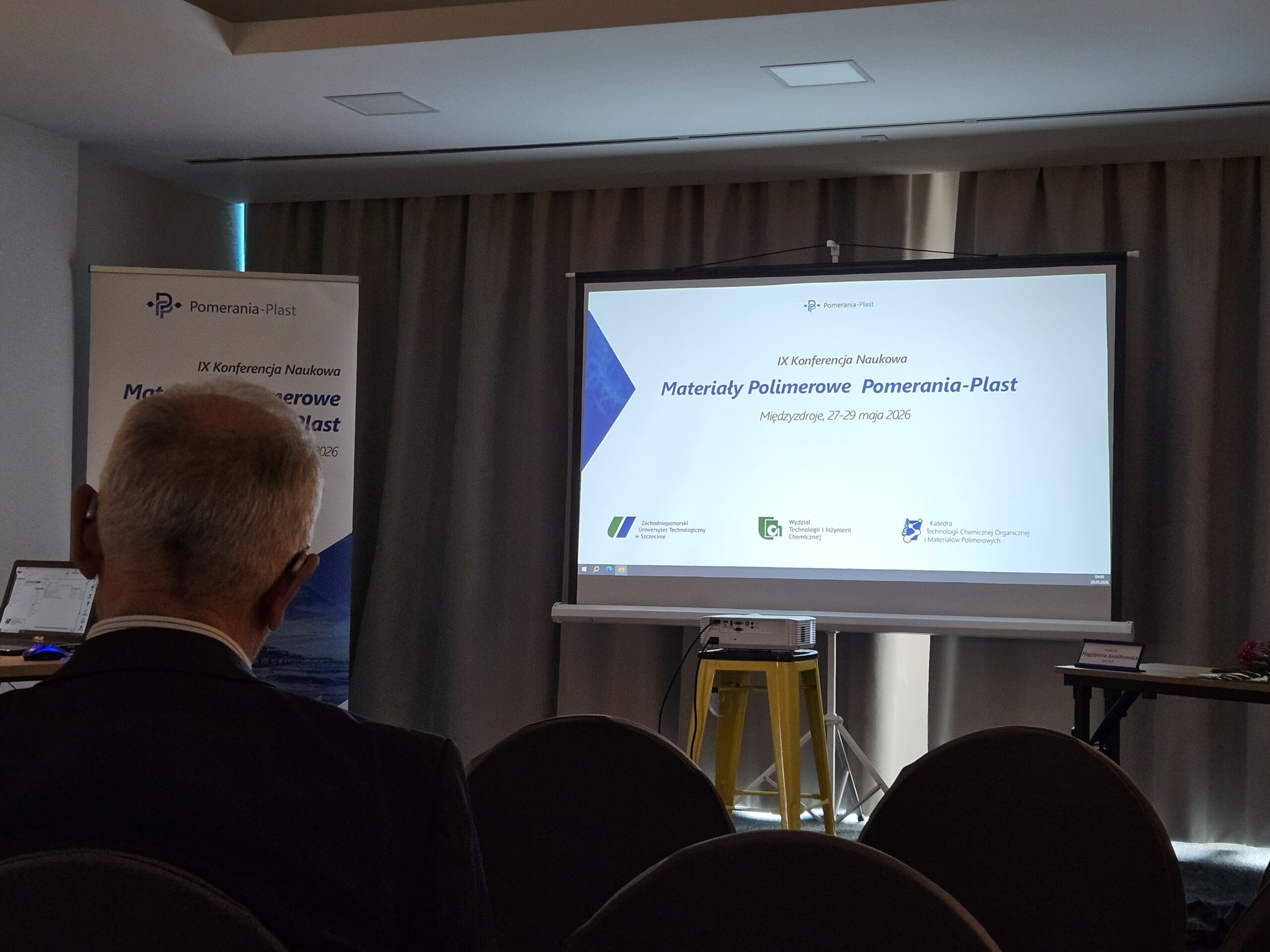
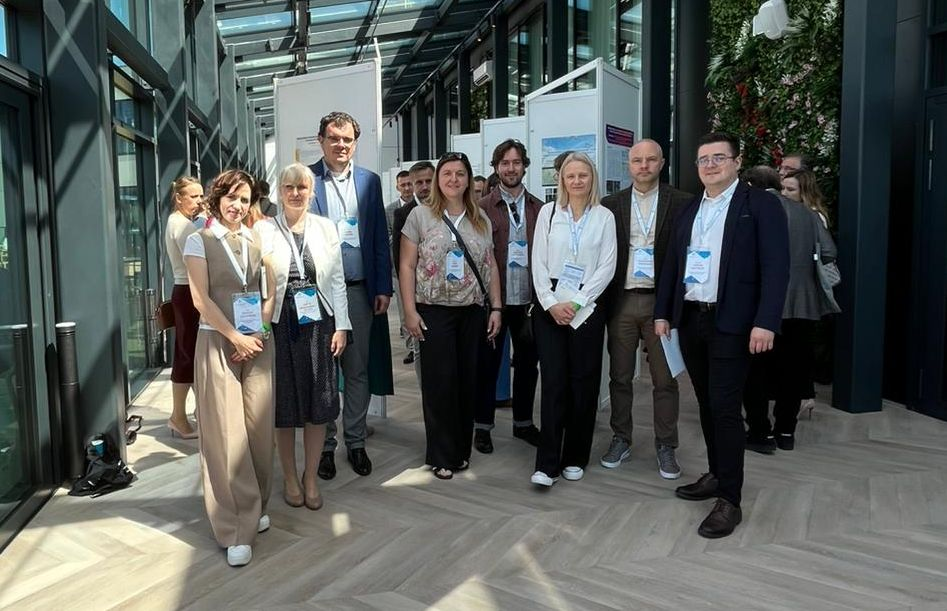
The end of May brought us to Międzyzdroje, where during the 9th Scientific Conference “Polymer Materials Pomerania-Plast 2026,” members of our research team are presenting a poster dedicated to the RASCOS project, carried out with support from the Swiss Funds.
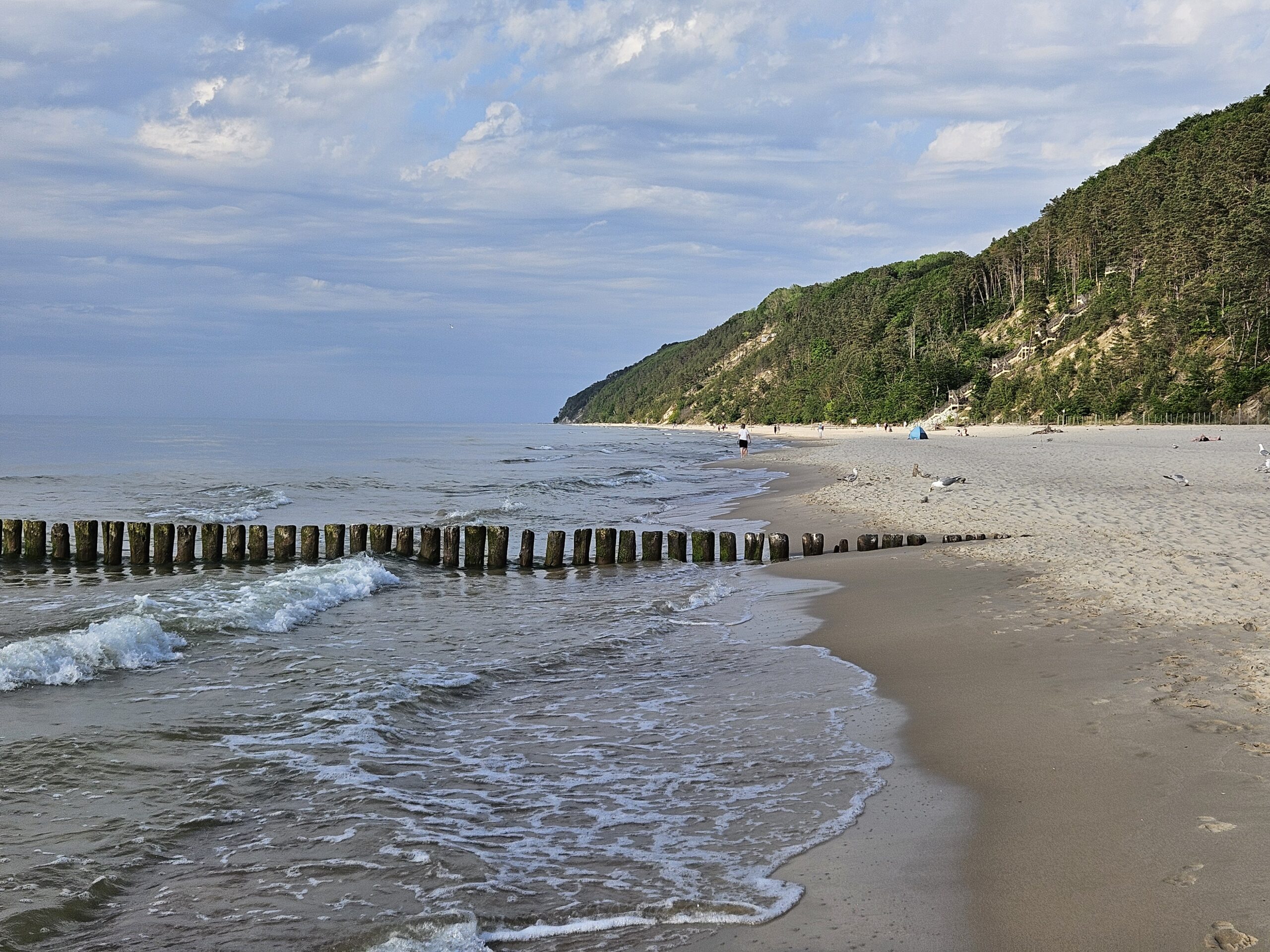
Surrounded by a coastal landscape and among representatives of science and the plastics industry, we are discussing one of the less obvious but highly important areas of modern infrastructure — durable and sustainable coating systems for structures operating under demanding service conditions.
Coatings for Hyperloop infrastructure
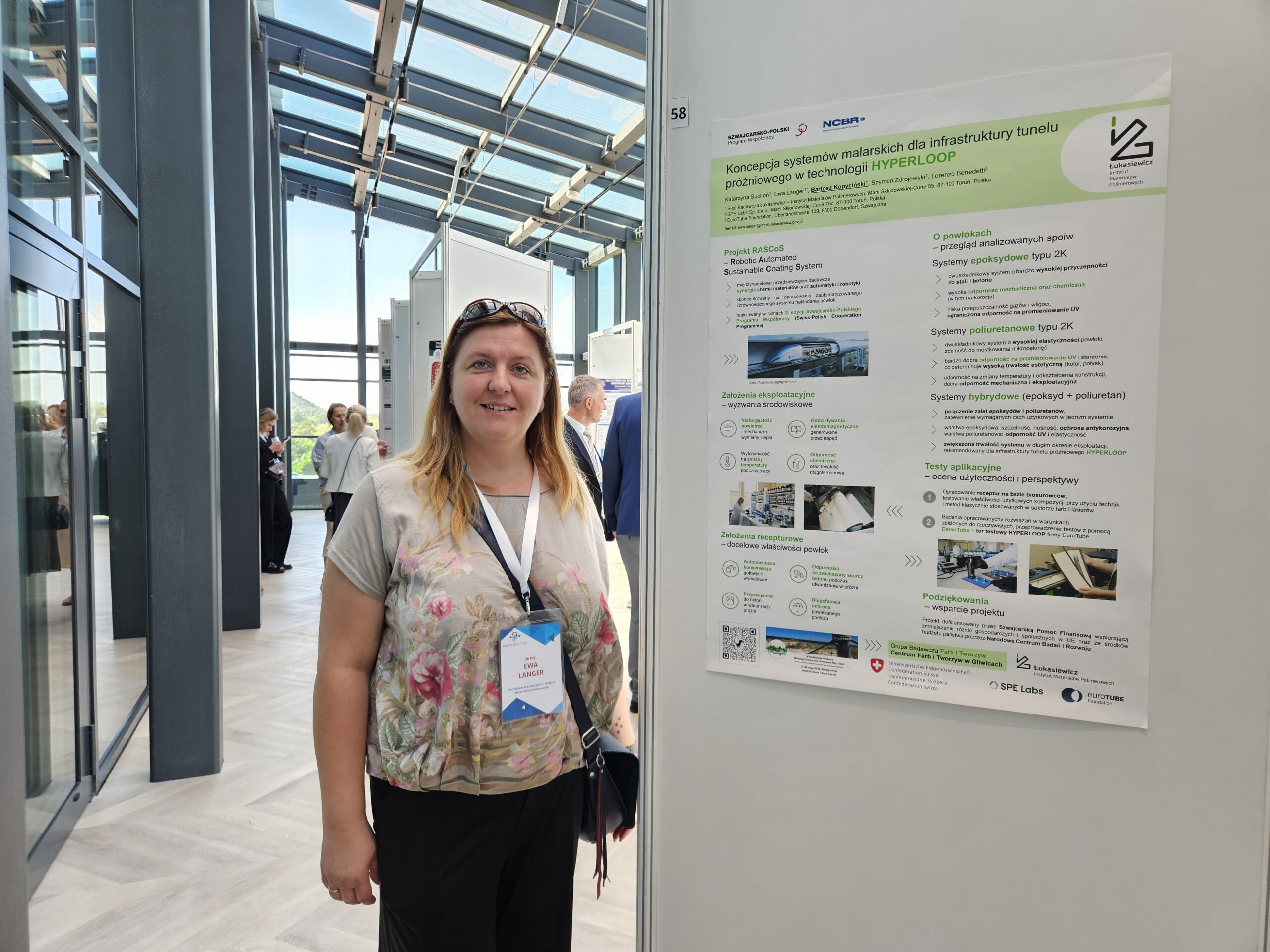
During the conference, we are presenting a poster with test results form RASCOS project:
“Concept of coating systems for Hyperloop vacuum tunnel infrastructure”
Authors: Katarzyna Suchoń, Bartosz Kopyciński, Ewa Langer, Szymon Zdrojewski, Lorenzo Benedetti
The project focuses on developing a concept for coating systems for concrete infrastructure operating under reduced pressure and vacuum conditions. This environment places exceptionally high demands on materials — both in terms of durability and long-term stability of properties during extended service life.
From theory to material selection
We are currently carrying out the first stage of the RASCOS project, in which we analyze available solutions and operational requirements, as well as select polymers that will serve as binders in the designed coating systems.
Although paint may seem like just a protective layer, in practice each component influences the final properties of the coating — its mechanical resistance, adhesion, durability, and applicability under industrial conditions.
And this is exactly where the biggest challenge begins.
Durability, sustainability, and cost — a difficult compromise
One of the key challenges today remains the simultaneous reconciliation of several requirements: high coating durability, reduced environmental impact, compatibility with automated application processes, and economically viable implementation costs.
Although raw material suppliers are increasingly offering “green” components, developing a complete coating system still requires a series of technological trade-offs and multiple stages of optimization.
In practice, this involves extensive laboratory trials, testing different material configurations, and analyzing coating performance under non-standard operating conditions.
The solutions developed within the RASCOS project aim to support the development of more durable, safer, and easier-to-maintain infrastructure for the future. The project covers not only issues related to the design of protective coatings, but also aspects of automation in the maintenance and upkeep of infrastructure assets.
For future users, this potentially means:
greater durability of surface protection,
less frequent need for repairs and downtime,
reduced infrastructure maintenance costs,
the possibility of implementing more sustainable material technologies.
Conferences such as Pomerania-Plast are an important platform for exchanging experience — they allow us to confront laboratory assumptions with the practical needs of industry and to demonstrate how many challenges lie behind seemingly simple surface protection processes.