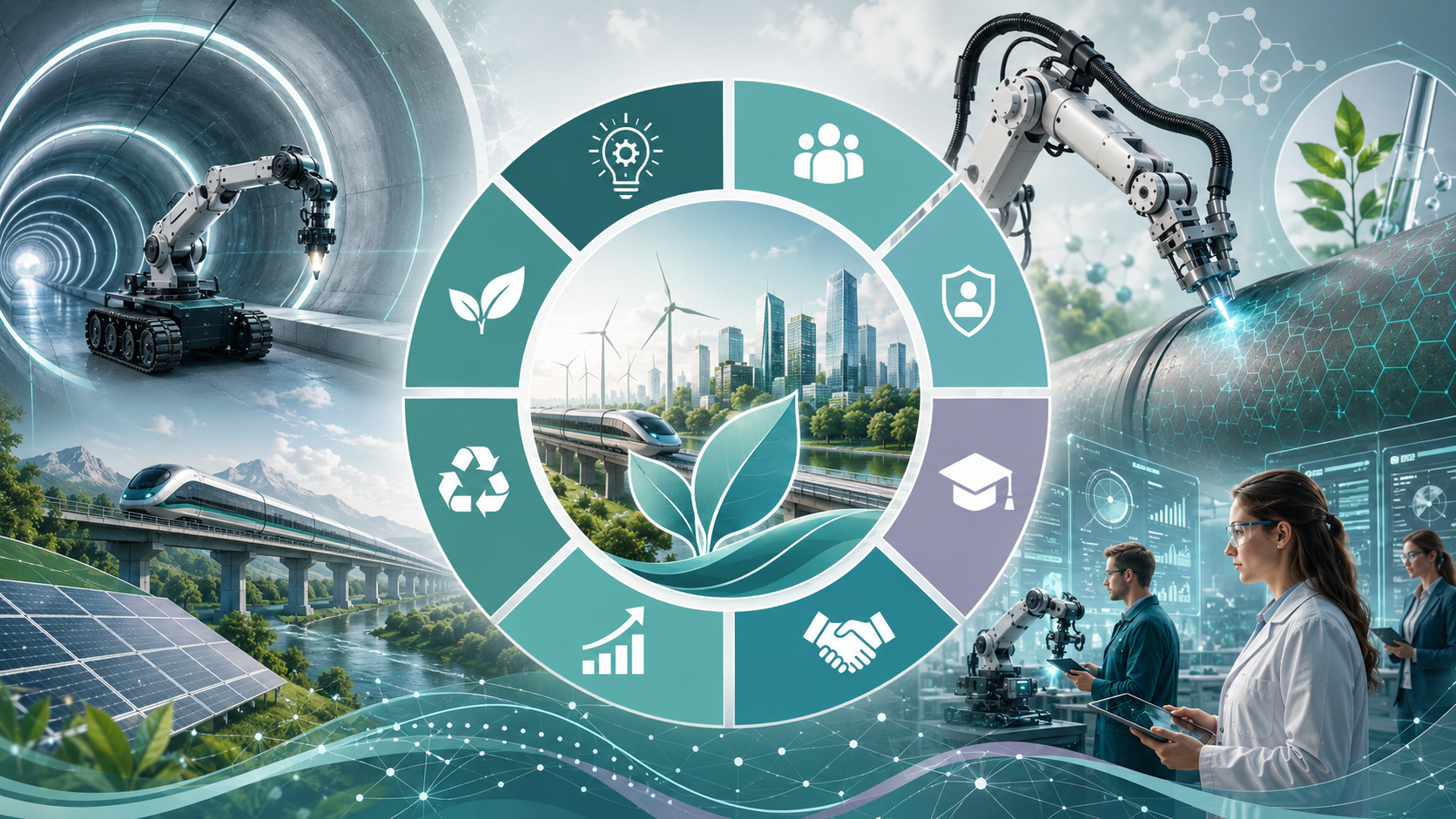
The project will deliver an integrated, market-oriented solution combining advanced bio-based coating systems with an autonomous robotic platform for inspection, application, and maintenance. This dual innovation represents a substantial advancement over existing technologies, enabling precise, repeatable, and automated coating processes in challenging environments, including confined spaces and vacuum conditions.
The project will increase the Technology Readiness Level (TRL) from TRL 2 (technology concept formulated) to TRL 6 (technology demonstrated in a relevant environment), ensuring readiness for industrial deployment. The developed technologies will include at least four novel products or system components and are expected to result in a minimum of three intellectual property applications.
Environmental Impact
RASCOS will contribute to the transition toward a low-carbon and circular economy by replacing fossil-based coating components with bio-based raw materials, targeting at least a 50% share of renewable content. The implementation of sustainable coatings will lead to:
a reduction of harmful solvent emissions by at least 30%,
decreased greenhouse gas emissions associated with coating production,
improved durability of infrastructure (minimum +15%), reducing material consumption and maintenance frequency.
Additionally, the developed coatings will reduce gas permeability by approximately 10% under vacuum conditions, supporting energy efficiency and airtightness in advanced transport systems such as hyperloop, directly contributing to SDG 7 (Affordable and Clean Energy).
Economic and Industrial Impact
The project addresses the critical need for cost-effective infrastructure maintenance by providing durable coatings and automated maintenance systems. The integration of robotics will:
reduce operational and labor costs,
minimize downtime in infrastructure systems,
enhance efficiency in inspection and repair processes.
The solutions developed within RASCOS are highly scalable and applicable across multiple sectors, including transport infrastructure (rail, tunnels), energy systems, construction, and aerospace. This scalability significantly enhances commercialization potential and market uptake, strengthening the competitiveness of participating organizations.
Societal Impact
The project will improve occupational safety by deploying autonomous robotic systems in hazardous environments, significantly reducing human exposure to harmful substances and high-risk conditions (SDG 3 and SDG 8).
RASCOS also promotes gender equality (SDG 5) and human capital development by actively engaging female researchers in key scientific and leadership roles and supporting early-stage researchers through structured mentoring and international collaboration.
Dissemination and outreach activities, including scientific publications, conferences, and public engagement, will increase awareness of sustainable technologies and innovation in infrastructure, contributing to broader societal acceptance and adoption.
Scientific and Capacity-Building Impact
The project will strengthen the competencies of participating institutions through interdisciplinary collaboration in materials science, robotics, and infrastructure engineering. It will support the development of at least 17 researchers, including early-stage scientists, fostering expertise in emerging technologies and enhancing long-term research capacity.
The collaboration between Polish and Swiss partners will reinforce international research networks (SDG 17) and facilitate knowledge transfer, joint innovation activities, and future funding opportunities.
Long-Term Impact
In the long term, the RASCOS project will enable the deployment of advanced coating systems and autonomous maintenance technologies across diverse application domains, contributing to:
increased resilience and sustainability of infrastructure systems,
improved quality of life through safer and more reliable transport systems,
acceleration of innovation in bio-based materials and robotic automation.
By integrating sustainable materials with intelligent automation, RASCOS establishes a new technological paradigm for infrastructure maintenance aligned with future mobility systems and climate-neutral development strategies.